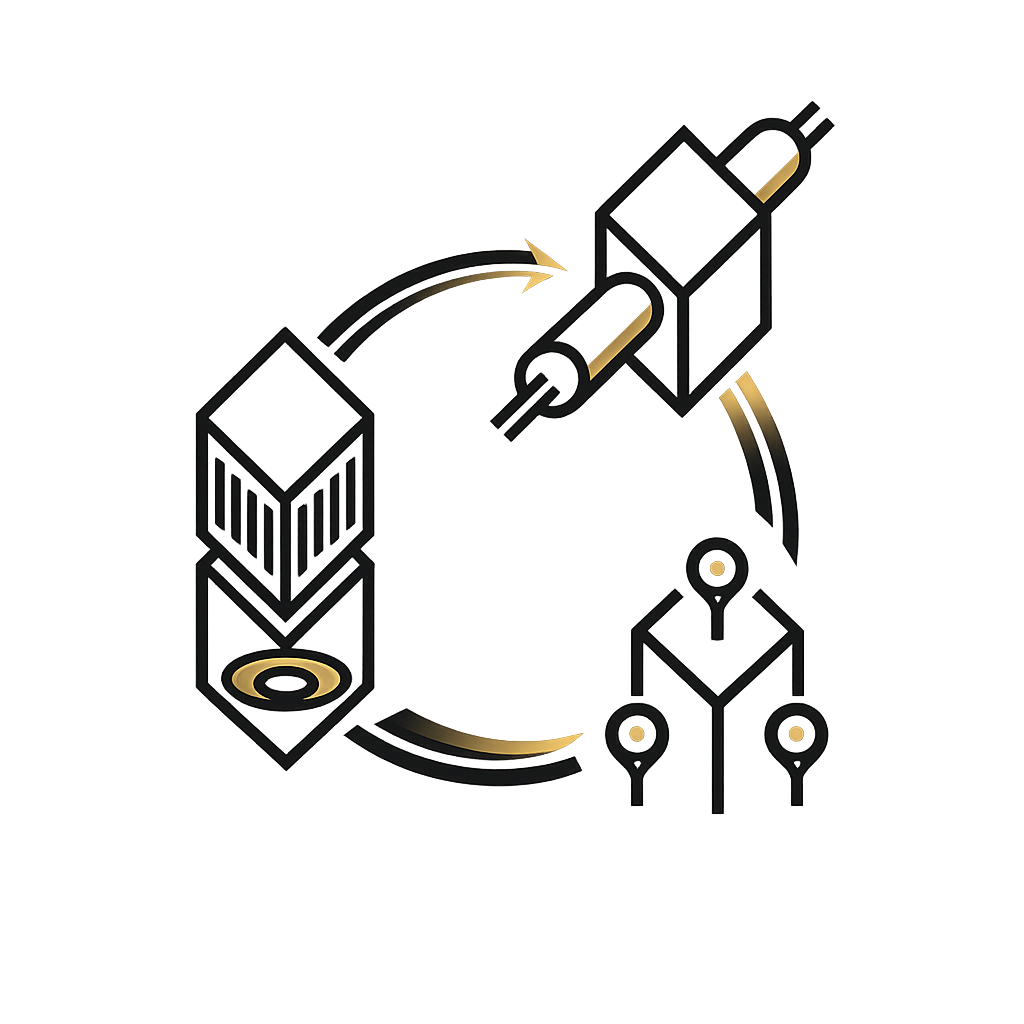
The Three Pillars Doctrine defines architecture as an integrated living system where production, mobility, and nature are structurally embedded into new typological models beyond existing paradigms.

PVW — Paskalev Visionary Workshop
Paskalev Visionary Workshop (PVW) is a research and experimental platform exploring the future of architecture, urban environments, and new models of inhabitation.
PVW operates beyond conventional architectural practice.
It approaches architecture as a research process, a cultural instrument, and a living infrastructure—one that integrates nature, energy, food production, and human life into coherent spatial systems.
Rather than designing isolated buildings, PVW develops architectural hypotheses: radical yet realistic visions that question existing norms, regulations, and development models. These ideas are not speculative fantasies, but possible utopias—concepts grounded in current technologies, environmental logic, and social necessity.
The platform focuses on:
post-carbon architecture
integration of ecosystems, energy, and habitation
new urban typologies beyond current regulatory frameworks
architecture as a driver for systemic change
PVW is a space for thinking ahead— before the rules exist.
The Three Pillars of PVW
1. Zero Distance
Food production integrated into architecture
PVW explores architectural typologies in which food production is embedded directly into houses, buildings, restaurants, and neighborhoods.
By integrating vertical, automated, and robotic gardens into the built environment, the distance between production and consumption becomes zero.
This pillar reconfigures the traditional typology of the rural house and village, restoring the link between habitation and production within an urban context.
2. Integration of Mobility and Architecture
Architecture shaped by future mobility systems
Throughout history, dominant modes of transportation have shaped architectural typologies and urban form—from cities scaled to carts and carriages to the automobile-driven modern metropolis.
PVW investigates new spatial models where architecture and mobility are deeply integrated, responding to emerging paradigms of electric, shared, and autonomous transport.
A change in mobility inevitably requires a change in architecture—and in the city itself.
3. Integration of Nature and Inhabitation
Cities, buildings, and neighborhoods as living ecosystems
PVW develops spatial systems that raise the level of integration between natural ecosystems and human habitation: garden cities, building-gardens, forest neighborhoods, and urban forests.
By freeing ground for nature and layering habitation, parks, and infrastructure at different levels, these models allow coexistence without conflict—creating balanced environments between humans, architecture, and natural ecosystems.
PVW PROJECTS
Modular, demountable construction systems through which we build the different PVW typologies
New residential typology that fundamentally reconfigures the relationship between habitation, food production, and energy infrastructure
A Typological Prototype for Autonomous Vertical Communities
It transforms the urban jungle into a layered ecosystem, where architecture coexists with nature
Horizontal civic megastructures built over highways, converting transport speed into public accessibility while freeing ground-level territory for restored nature and metropolitan landscapes.
Floating Resort is a modular, energy-producing settlement model that enables tourism without urbanization and comfort without coastal destruction, redefining luxury as presence without damage.
An interactive urban laboratory that enables the public to co-create and test carbon-neutral city models through modular architecture, embedded environmental data, and AI-generated spatial simulations.
A spatial experiment in zero-distance urbanism—where food, energy, and architecture converge into one continuous system.